Discovering Your Minimum Viable Purpose: A Guide for the Third Act of Life
Updated: Aug 30
You probably know what a Minimum Viable Product (MVP) is. It’s the smallest version of something that still works. It's enough to test, learn from, and provide value to your customer. You don’t gold-plate it or perfect it until you get feedback. It just needs to function above a certain threshold. Iterations happen later.
I spent my career in technology. Like many in this field, I learned about MVPs through Eric Ries’s best-selling book, The Lean Startup. However, I didn’t realize until I became an elder and started contemplating retirement that the same principle applies to the third act of life.
The Bug Nobody Warned You About
Modern retirement is a relatively recent social construct. It emerged during the industrial era, designed for a world where many worked physically demanding jobs. People wore their bodies out by a certain age and expected a shorter period of rest before death. The retirement age was set for practical reasons, not biological ones.
The financial model behind this system relied on a long period of contributions and a shorter period of benefits. This made sense when life expectancy after retirement was much shorter than it is for many today.
What changed? It wasn’t just medicine, nutrition, and public health. It was longevity itself. Many people now live for years, sometimes decades, beyond the age at which they stop working. This creates a new problem: how to sustain healthspan once the structure of work is gone.
The missing ingredient was never designed into the system. When it goes unaddressed, research suggests that purpose, cognition, and health can all suffer.
One landmark study published in the Journal of Economic Perspectives found that early retirement significantly negatively affected cognitive ability in a multinational cohort of subjects from the US and Europe. In other words, the loss of mental stimulation matters. Research also indicates that retirement can create a purpose gap for some. This gap may be linked to declines in well-being when it is not replaced by meaningful activity.
In my early life, I remember my grandfather. He had an exciting and engaging work life, traveling the globe as a leather industry executive. He retired in his early 70s, which was considered “old age” in the early 1970s. His vibrancy and health declined quickly once he stopped working. His body literally began to shrivel, relegating him to bed rest without any medically diagnosed condition. I’ve begun connecting these observations with published research to understand how retirement impacts older adults.
The negative effects don’t seem to stem from retirement itself. Instead, they arise from the void that work once filled when it isn’t replaced by something purposeful and fulfilling.
The Signal Your Biology Is Looking For
Your nervous system operates on a biological signal pattern. It doesn’t evaluate the prestige of what you’re doing. It doesn’t compare your post-career contributions to your former career highlights. It checks for one thing consistently:
Are you needed? Is tomorrow worth getting up for?
That signal can come from something small. It could be a conversation with a founder who values your pattern recognition. It might be a craft you’re developing with measurable weekly progress. Perhaps it’s a community problem that needs your expertise built over forty years. Or a teaching relationship with someone who keeps coming back because your wisdom is genuinely useful.
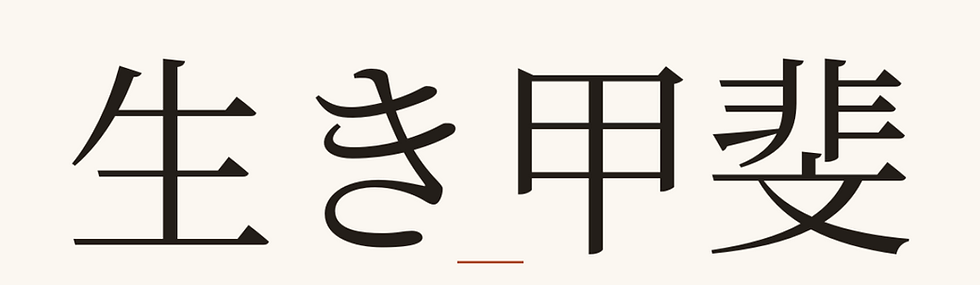
Japanese research on ikigai, which means a reason for getting up in the morning, suggests that people with a strong sense of purpose may have better long-term outcomes. One study found that having ikigai was associated with a lower risk of developing dementia over a three-year follow-up period. While this doesn’t prove causation, it points in a direction worth taking seriously.
The underlying biology doesn’t seem to care whether your purpose is grand or modest. It responds to whether the signal is there.
The Minimum Viable Purpose™
I borrowed the term deliberately from The Lean Startup. The term was coined by Frank Robinson and later popularized by Steve Blank and Eric Ries.
Minimum Viable Purpose, as I’m using it here, is the smallest genuine engagement that still produces the signal your nervous system needs to stay tuned up and running. In my definition, MVP has three required components:
Anticipation: Something you genuinely look forward to tomorrow, not just dreaming of someday.
Mattering: Someone’s life or something you care about is positively affected because you showed up.
Agency: You chose it because you actually want to. It’s not something you do out of guilt, obligation, or expectation.
You need all three to get above the threshold. When they are present, there’s a plausible case that purpose supports better emotional and cognitive functioning. When they are absent, even a calendar full of “important” things may not be enough.
What This Is Not
This isn’t an argument against retirement. Some people are eager to leave work and thrive in leisure, family, travel, volunteering, or a completely different rhythm of life.
However, it is an argument for something more specific. The biology that kept you healthy during your career responded to signals that work often supplied. At retirement, those signals need a replacement.
Your Last Build
You’ve spent your career building things for others: products, companies, teams, systems, and solutions. Now, the product you need to focus on is you.
What is the Minimum Viable Purpose that actually works for you?
The answer is smaller and more accessible than you think. But it matters, perhaps more than almost anything else you will do in the last third of your life. Minimum Viable Purpose may be the patch that retirement was missing.
In conclusion, as we navigate this transition, let’s remember the importance of purpose. It’s not just about filling time; it’s about finding meaning. What will your Minimum Viable Purpose be? How will you ensure that you remain engaged, vibrant, and fulfilled? The journey ahead is yours to define, and it starts with understanding what truly matters to you.


Comments